How to Start an Embroidery Business in 2026 | Costs, Website, Branding & Growth

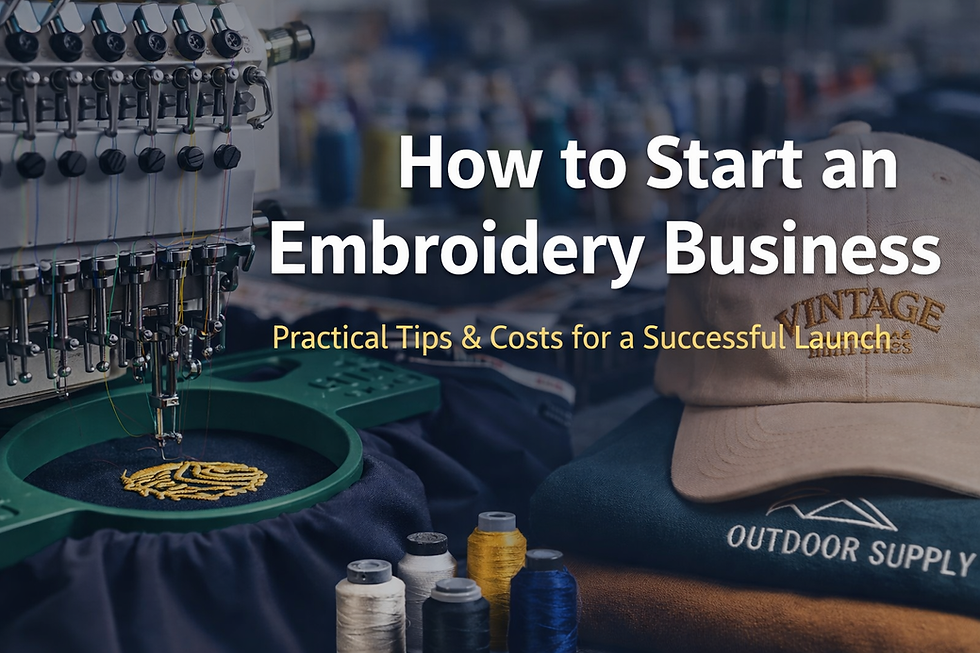
How to Start an Embroidery Business in 2026
Starting an embroidery business can be an exciting way to turn creativity into a real income stream, but success usually comes down to much more than buying a machine and posting a few products online. The embroidery businesses that grow are the ones that understand branding, pricing, presentation, customer trust, and how to turn attention into sales.
I come at this from the perspective of someone who has worked in marketing, branding, web design, SEO, and content strategy for real businesses. One thing I have seen over and over is that small business owners often focus only on the product, while overlooking the things that make people actually buy. That is especially true in visual industries like embroidery, custom apparel, and branded merchandise.
If you are trying to figure out how to start an embroidery business, this guide will walk you through the most important steps, including startup costs, business models, branding, pricing, websites, and the biggest mistakes to avoid.
Why Starting an Embroidery Business Can Be a Smart Opportunity
Embroidery sits in a strong position because customers often view it as more premium, durable, and polished than standard printed apparel. Businesses use embroidery for uniforms, workwear, and branded merchandise. Clothing brands use it to elevate hats, hoodies, crewnecks, and jackets. Personalized gift sellers use it for names, monograms, and custom items.
That gives you multiple ways to build an embroidery business:
local embroidery services
custom branded merchandise
embroidered clothing brands
personalized products
home-based embroidery services
ecommerce embroidery stores
The key is choosing the right direction early.

Step 1: Decide What Kind of Embroidery Business You Want to Start
One of the first mistakes people make when starting an embroidery business is being too broad. They try to serve everyone, sell everything, and compete with established businesses before they even understand their own niche.
A better approach is to choose what type of embroidery business you actually want to build.
Local service-based embroidery business
This model works well if you want to serve:
contractors
gyms
restaurants
sports teams
schools
local businesses
events and organizations
This path is often built around repeat orders, referrals, and business-to-business relationships.
Embroidered apparel brand
This is more brand-driven and ecommerce-focused. You might sell:
embroidered hoodies
hats
crewnecks
beanies
tote bags
jackets
This model depends heavily on presentation, product photography, branding, and your website.
Personalized embroidery business
This is often ideal for Etsy or gift-based selling. Products might include:
baby items
monogrammed garments
gifts
wedding apparel
personalized hats and accessories
Home-based embroidery business
If you are wondering how to start an embroidery business from home, this is one of the most realistic starting paths. It allows you to begin lean, learn the process, test demand, and avoid taking on too much overhead too early.
Step 2: Choose a Niche That Makes You Easier to Remember
If your embroidery business feels generic, it will be harder to market, harder to price, and harder to grow.
One thing I have learned from building brands and marketing businesses is that clarity sells better than variety. When customers immediately understand what you do and who you serve, your business becomes easier to trust.
You could niche your embroidery business around:
promotional products
premium streetwear
corporate uniforms
workwear for trades
gym and fitness apparel
personalized gifts
school and team merchandise
creator merch
small business branded apparel
For example, if you start an embroidery business for promotional products, your website, messaging, and portfolio should reflect that. If you want to start a premium embroidered apparel brand, the entire visual identity and customer experience should feel different.
Step 3: Understand What It Costs to Start an Embroidery Business
A common question is: how much does it cost to start an embroidery business?
The answer depends on the model you choose.
If you start small from home, your upfront costs may include:
embroidery machine
thread
hoops
stabilizer
needles
blanks
packaging
website
business registration
software
logo and branding
marketing materials
If you outsource production or use fulfillment partners, your startup cost may be lower, but your margins and control may also be lower.
What I have seen with many small businesses is that they underestimate not just equipment costs, but the cost of poor decisions. Choosing the wrong product lineup, underpricing, weak branding, or launching with no website can cost more than the machine itself.
That is why it is important to think in terms of both:
startup cost
mistake cost
Step 4: Learn the Difference Between a Hobby and a Business
A lot of people know how to make something. Fewer know how to build demand around it.
That difference matters.
If you want to start your own embroidery business, you need to think beyond stitching. You need to think about:
who your ideal customer is
why they would buy from you
how your work is presented
what makes your offer different
how people find you
how you turn interest into orders
This is where many new businesses struggle. They focus on the craft but ignore the customer journey.
A strong embroidery business is not just built on product quality. It is built on product quality plus positioning.

Step 5: Build a Brand That Looks More Premium Than Your Price Point
In custom apparel and ecommerce, people judge quality before they ever touch the product.
That means your:
business name
logo
colors
photography
packaging
website
social media
product pages
all shape whether customers see you as amateur or premium.
From my experience in marketing and design, poor presentation is one of the fastest ways for a business to lose trust. A great product can still feel low-value if the brand looks rushed or inconsistent. On the other hand, a smaller business can feel far more established when the visuals, messaging, and website are clean and intentional.
This is one of the biggest opportunities for new embroidery businesses.
Step 6: Create an Embroidery Business Starter Kit for Yourself
Before you start taking orders, build your own basic embroidery business starter kit.
That should include:
clear business name
simple brand identity
defined niche
product list
pricing structure
ordering process
quote form or inquiry method
sample photos
social media presence
basic website
Your embroidery business starter kit does not need to be fancy. It just needs to make you operational and credible.
Step 7: Set Pricing Based on Reality, Not Emotion
Many new embroidery businesses underprice because they are afraid people will say no.
That is one of the fastest ways to create a business that feels busy but stays unprofitable.
When setting pricing, account for:
blanks
thread and materials
time
digitizing
machine wear
setup
revisions
packaging
shipping
fees
profit margin
This applies whether you are starting an embroidery business from home or building something larger.
Cheap pricing may win short-term attention, but it often attracts the wrong buyers and makes scaling much harder. Good businesses are built on sustainable pricing.
Step 8: Start With Products That Make Sense
Do not try to launch twenty random items.
Choose products that match your niche and are easy to understand.
If you are selling to local businesses, common starting products might be:
polos
hats
jackets
work shirts
uniforms
If you are building an apparel brand, start with:
embroidered hoodies
embroidered hats
beanies
crewnecks
tote bags
If you are building around gifting:
monogrammed items
custom baby apparel
special occasion pieces
The more focused your starting lineup is, the easier it is to market.
Step 9: Build a Website Early, Even if You Start Small
A lot of people think they can rely only on Instagram, Facebook, or Etsy.
That may help you get started, but it is not enough if you want long-term growth.
A website helps your embroidery business:
look legitimate
rank on Google
collect inquiries
display your work properly
explain your services
build trust
support repeat sales
This is one of the biggest areas where businesses either gain momentum or get stuck.
From working with businesses on websites and digital strategy, I have seen how often weak websites quietly hurt sales. The owner may think the issue is traffic, but the real problem is that the brand does not look trustworthy enough, the offer is not clear, or the buying path is confusing.
For an embroidery business, your website should at minimum include:
homepage
about page
product or service pages
gallery or portfolio
FAQs
contact page
clear calls to action
If you want to build a real brand, this matters.
Step 10: Use Content to Get Found Before People Are Ready to Buy
One of the smartest ways to grow an embroidery business is by creating content around the things your customers are already searching for.
Examples include:
how to choose embroidered uniforms
embroidered vs printed apparel
best hats for embroidery
embroidery shop ideas
how to design branded workwear
how to care for embroidered clothing
how to launch an embroidered apparel brand
This kind of content helps you get on people’s radar early.
It also gives you an edge because most small embroidery businesses are not using content marketing strategically. That creates an opportunity.
Step 11: Use Local SEO or Ecommerce SEO Depending on Your Model
If you are serving local clients, your goal may be to show up for searches like:
embroidery business near me
custom embroidery in [city]
embroidered uniforms [city]
promotional products embroidery [city]
If you are selling online, your strategy may focus more on:
embroidered hoodie
custom embroidered hat
embroidery shop ideas
starting an embroidery business
personalized embroidered gifts
The important thing is choosing an SEO approach that fits your actual business model.
This is another area where I have seen businesses waste time. They publish random content, target the wrong keywords, or never connect their content to a clear service or product offer. SEO works best when it is aligned with the business model.
Step 12: Find Your First Customers With a Clear Offer
Your first customers are unlikely to come from “hoping.”
They usually come from direct action.
That may include:
reaching out to local businesses
offering sample work
creating portfolio pieces
posting behind-the-scenes content
sharing finished products consistently
selling on Etsy
networking locally
asking for referrals
partnering with designers, photographers, or marketing agencies
You do not need massive reach. You need a clear offer and a consistent process.
Common Pitfalls When Starting an Embroidery Business
These are some of the biggest mistakes I would watch for based on what makes small businesses struggle online and in competitive markets:
1. Launching with no clear niche
When everything feels broad, nothing feels memorable.
2. Underpricing
Many people start too cheap and trap themselves.
3. Focusing only on the product
You also need trust, positioning, and a sales process.
4. Weak brand presentation
If the visuals look low effort, customers may assume the work is too.
5. No website or poor website
This quietly hurts credibility and conversions.
6. Relying only on social media
Owned platforms matter.
7. Too many products too early
Simplicity wins at the start.
8. No content strategy
If people cannot find you, growth gets harder.
Final Thoughts: Starting an Embroidery Business the Right Way
If you want to know how to start an embroidery business, the most important thing to understand is this:
The businesses that win are usually not the ones doing the most. They are the ones doing the right things in the right order.
Start with:
a clear niche
a strong offer
a focused product line
smart pricing
a premium brand presentation
a website that builds trust
content that helps people find you
Embroidery can absolutely become a real business, but success usually comes from combining craftsmanship with branding, marketing, and customer experience.
That is what turns a side hustle into a business people take seriously.



Comments